3 Ways to Hold Grief With Tarot
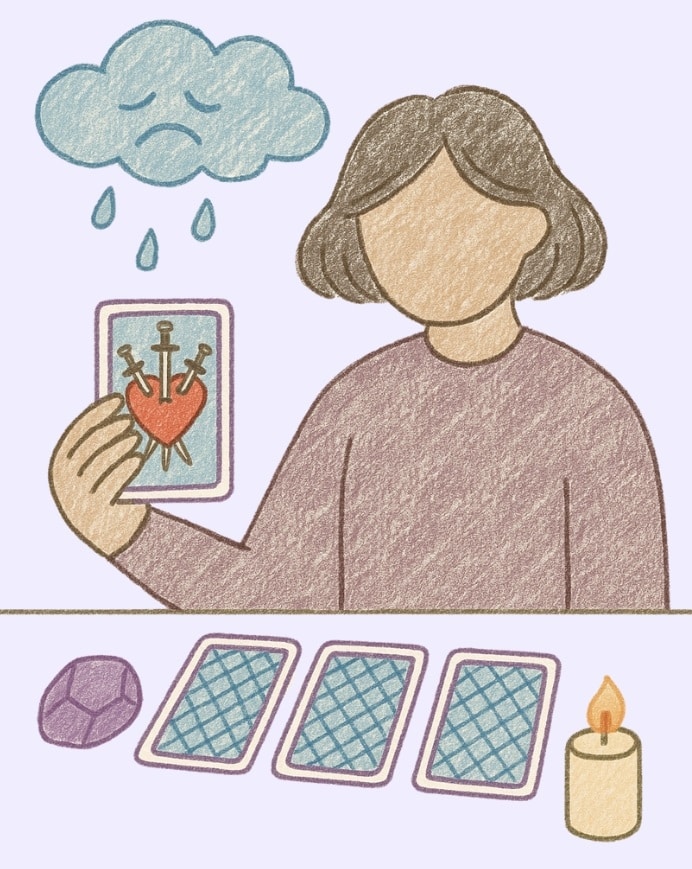
Grief doesn’t live in the shock of impact, but in the quiet persistence. In the memories. In the aching absence of something that mattered deeply and will not be unmattered.
To try and “heal” grief, in the way we often mean when we talk about healing, would be to erase something sacred. So maybe the point isn’t to heal it. Maybe it’s just to learn how to hold it. To remember how to breathe, and to find a way to stay upright when the rest of the world keeps spinning like yours isn’t shaking.
Some people reach for prayer beads. Some for the bottom of a glass. Some just go still. I reach for my cards. Tarot taught me how to hold it, and that there’s more than one way.
Here are three.
1. Use Tarot to Practice Co-Regulation With Yourself
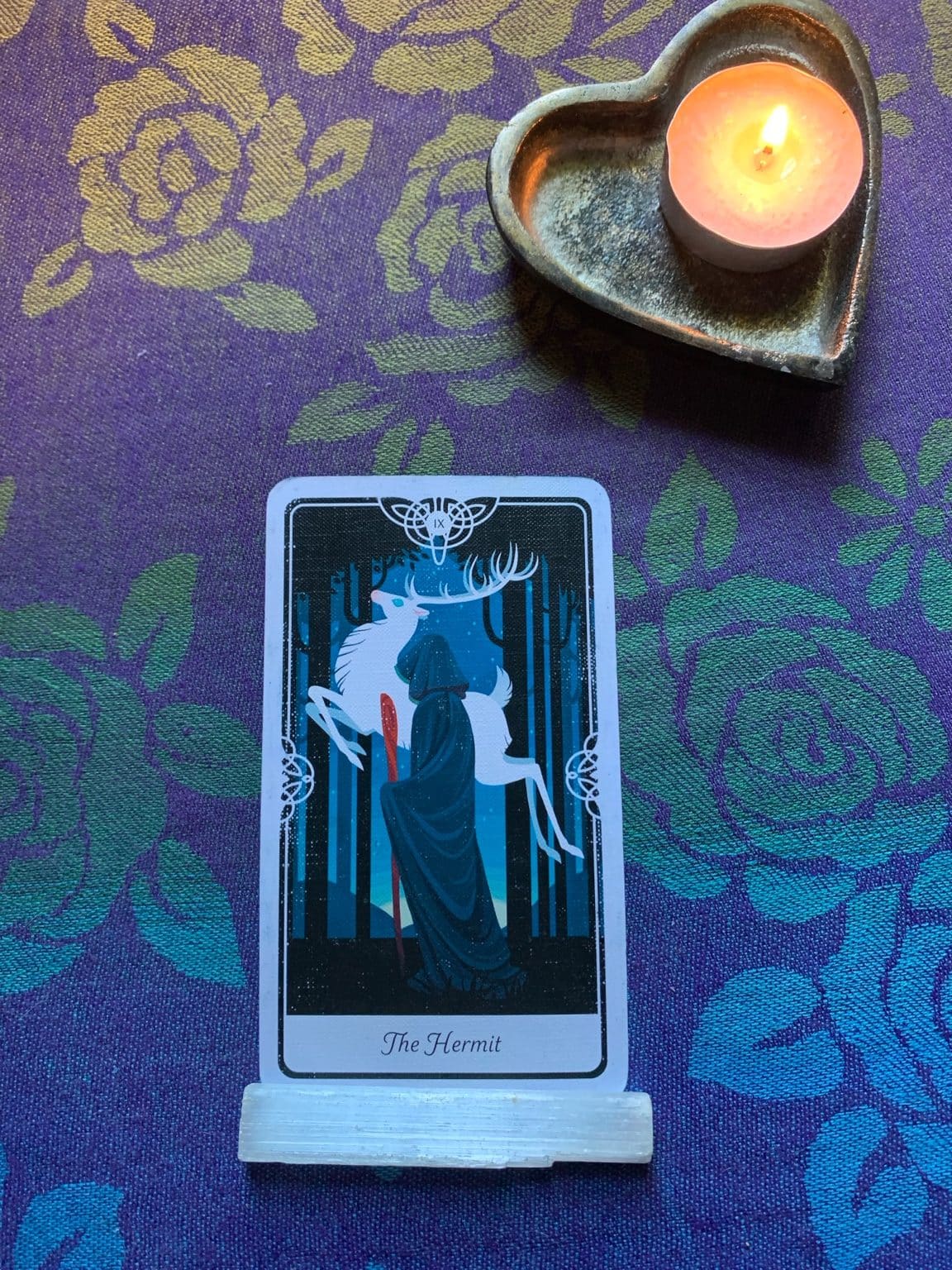
When we’re grieving, our nervous systems are overwhelmed. Grief floods the system. When that happens, what you need, and what all humans are wired to need, is someone to sit beside you. Someone to just be there until your nervous system remembers how to slow.
But sometimes, no one’s there right now. Just you, and your cards.
When to use it:
Use this practice when your grief feels too big to name, your breath’s shallow, and you can’t think your way out of it. When the silence is loud, your brain is louder, and your heart’s the loudest of all.
This is how you meet yourself.
What to do:
- Sit somewhere quiet. Place your deck in front of you. Put one hand on your chest, the other on your belly. Breathe in slowly. Exhale. Let your body know: we’re here now.
- Ask aloud or silently:
What part of me is here today, asking to be seen? - Shuffle and pull one card. Lay it down in front of you like you’re setting a place for a guest.
- Look at the imagery. Notice where your body reacts. A tightening. A lump in your throat. A tug from somewhere you can’t fully trace. Let the card speak for the part of you that doesn’t have language yet.
- Listen. You don’t have to do anything else. You don’t have to explain what you feel. You don’t have to give it a name. You don’t have to hear anything to be listening.
- Thank the part. When you’re ready, thank the card (and the part of you it represented). Feel your feet on the ground and tuck it gently back into the deck.
Why it helps:
This draws from parts work and somatic witnessing. You’re practicing self-attunement, and showing up for the parts of yourself that need holding. This is co-regulation, when you’re the one doing the holding. This is presence, when no one else is in the room.
2. Anchor Your Body With a Tarot-Based Grief Ritual

Grief doesn’t always feel like crushing weight. Sometimes, it feels like dense fog. Disorienting, abstract, foggy. It lifts you out of your body and leaves you drifting. You forget what time it is. You stare at walls. You pace. You scroll. You feel nothing, or too much.
When you’ve lost the ground, your body, or both, tarot can help bring you back.
When to use it:
Use this when you feel disoriented or scattered, like your feet aren’t quite touching the ground. When your body feels like it’s drifting one way and your brain another.
This can help you call yourself home.
What to do:
Once a week (or whenever the fog starts to thicken), set aside time for this ritual. Light a candle, breathe slowly, or just sit somewhere quiet.
Ask these three questions:
- What weight am I carrying this week?
- Where do I feel it in my body?
- What could support me as I carry it?
Pull one card for each question. Sit with them. Let them speak. Take a minute or two to notice what they’re pointing to. If your card doesn’t make sense right away, that’s okay. Don’t redraw, just let it fester.
Next, match a simple somatic action to the third card. This helps you meet it with your body, instead of only just your mind.
Here are a few examples by suit to help guide you:
- Cups → take a warm bath, cry, drink water, listen to music that matches your mood
- Pentacles → cook a grounding meal, clean one surface, walk barefoot on earth
- Swords → journal, name the intrusive thought, exhale longer than you inhale,
- Wands → dance, shake out your limbs, yell in the car, light something (safely) and watch it burn
- Majors → light a candle, speak a vow, step through a doorway, draw a sigil, meditate
You can keep it simple. One small action is enough.
Why it helps:
This practice draws from both grief theory and polyvagal theory: you’re making your internal experience visible, nameable, and somatically supported. You’re creating a bridge between what you feel and what you do with it.
3. Memorialize the Love With a Tarot Vigil
Sometimes, the grief feels settled enough that it no longer flattens you. You can go about your day. You can function. Maybe you even start to feel okay again… until you remember. But then you look back, and there it is: a big ball of grief still blocking out the sun. Eclipsing the joy that once lived in the memories you cherished most. Like the grief swallowed the good. Like the ending rewrote everything that came before it.
But it didn’t.
When to use it:
Use this when the grief has quieted, but the memories still won’t come clean. When looking back leaves traces of smog on your heart. When you’re ready to remember the good again.
This practice pays homage to the beautiful.
What to do:
This isn’t a spread. It’s a vigil.
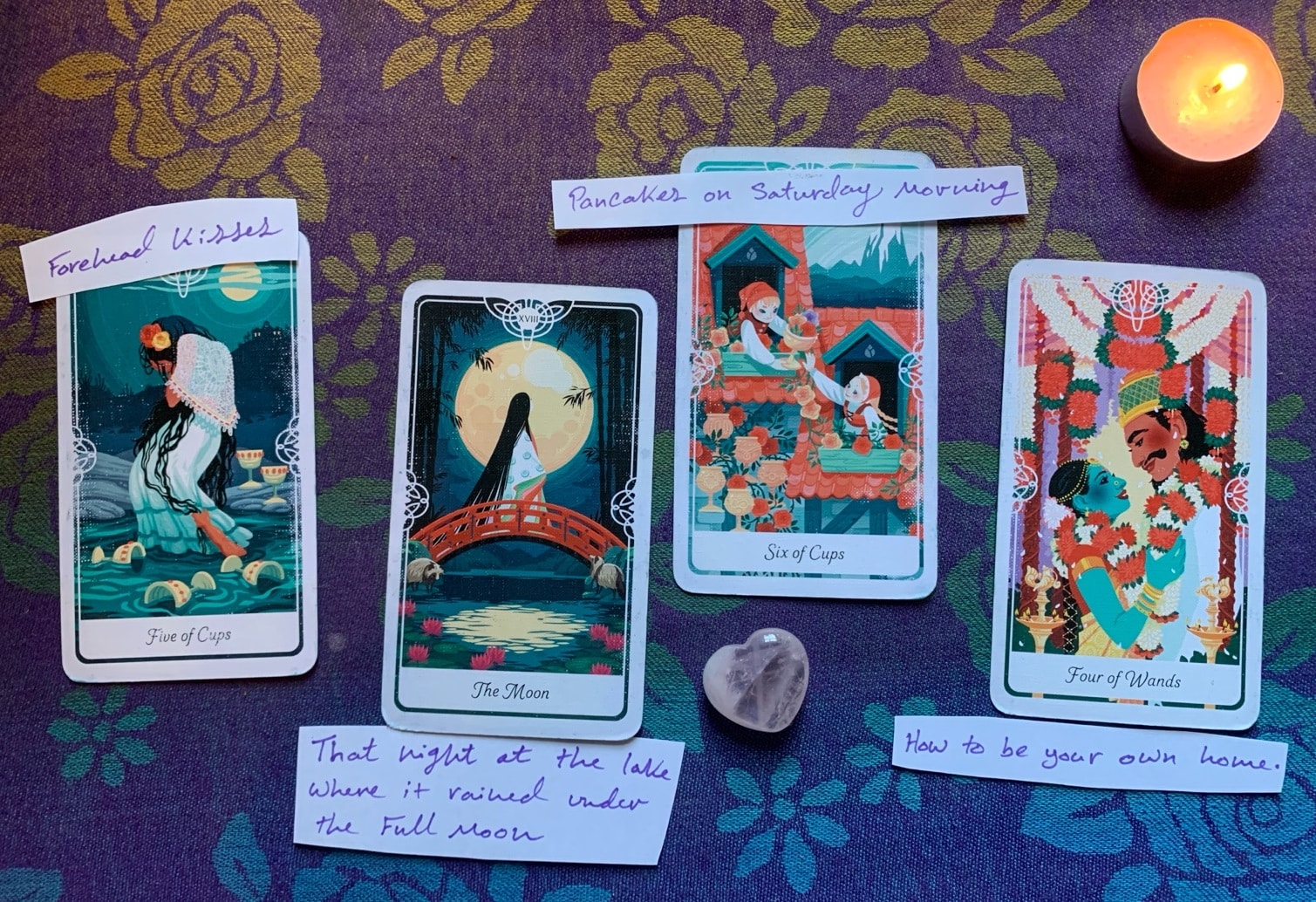
1. Choose four cards – face up, on purpose
Don’t draw at random. Read these one at a time, and take your time thoughtfully selecting each card with care. Let the imagery and whatever thoughts, feelings, and memories bubble up guide your choices.
One card for each of these:
- A moment where I felt held / understood / seen / connected
- A memory that makes me smile, even now
- A part of them I still carry
- One way they changed or shaped me
2. Lay them out like a keepsake
There’s nothing to interpret. You’re not analyzing. You’re arranging them like photos in a frame.
3. Write a single sentence to each card
Something like:
- You met me where no one else could.
- This is the day I remember us laughing.
- I still say that thing you always said.
- Your patience lives in how I speak to myself now.
No journaling. Just four sentences. Short, true, and enough. You don’t have to cut them out and arrange them with the cards, but I chose to.
4. Mark the act
It doesn’t have to be dramatic. A flame. A slow breath while you count to 10. Close a book with a flourish. Just a quiet gesture that says: This mattered. This was mine. I remember.
5. Leave the cards out overnight.
Let them keep vigil. You don’t have to stay. Just let the cards keep remembering, on your behalf.
Why it helps:
This practice draws from narrative therapy and continuing bonds theory, where memory is sacred and love doesn’t end. When you choose what to remember, you choose what lives on.
This helps you honor what mattered, and let it matter still.
Be Well
I’m grateful you spent time here with me today.
That’s all for now. Be gentle with yourself. Or weird. Or whatever helps.
Until next time,
–Callie